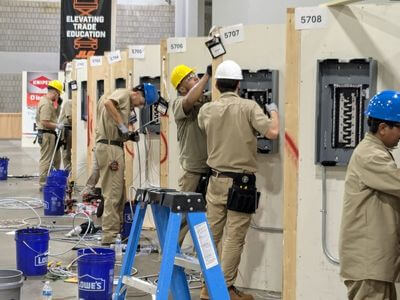
Homeowners across Fort Grounds, Riverstone, and the streets near Hayden Lake are asking about EV chargers more than they were even two summers ago, and the question almost never starts with the charger itself. It starts with the panel. A Level 2 home charger typically pulls a dedicated 240-volt circuit rated between 40 and 50 amps, and plenty of Coeur d'Alene houses built in the 1970s and 80s were wired with 100-amp service that's already carrying a well pump, electric baseboard heat, or a hot tub. Adding a charger to a panel like that isn't a matter of running one new wire; it's a matter of finding out whether there's any headroom left at all.
That's why a real load calculation has to come before anything gets installed. An electrician tallies up what the existing circuits actually draw versus what the panel is rated for, and if the numbers don't leave enough margin, the charger installation turns into a panel upgrade project first. Skipping that step is how homeowners end up with breakers that trip under normal use, or worse, a panel running hotter than it should under sustained load.
It's worth noting how differently companies structure this service. Orem Electrician Pros lists EV charger installation as its own standalone offering rather than bundling it under general wiring work, which tracks with how much planning the job actually takes compared to something like a light fixture swap. On our jobs around Coeur d'Alene, the process starts the same way: we check the panel's existing amperage and current load before we ever talk charger models or mounting locations, since that determines whether this is a same-day install or a two-phase project.
If you're weighing an EV purchase and want to know what your home's electrical system can actually support, get that panel checked first. Knowing your amp capacity ahead of time means no surprises once the vehicle is already in the driveway.